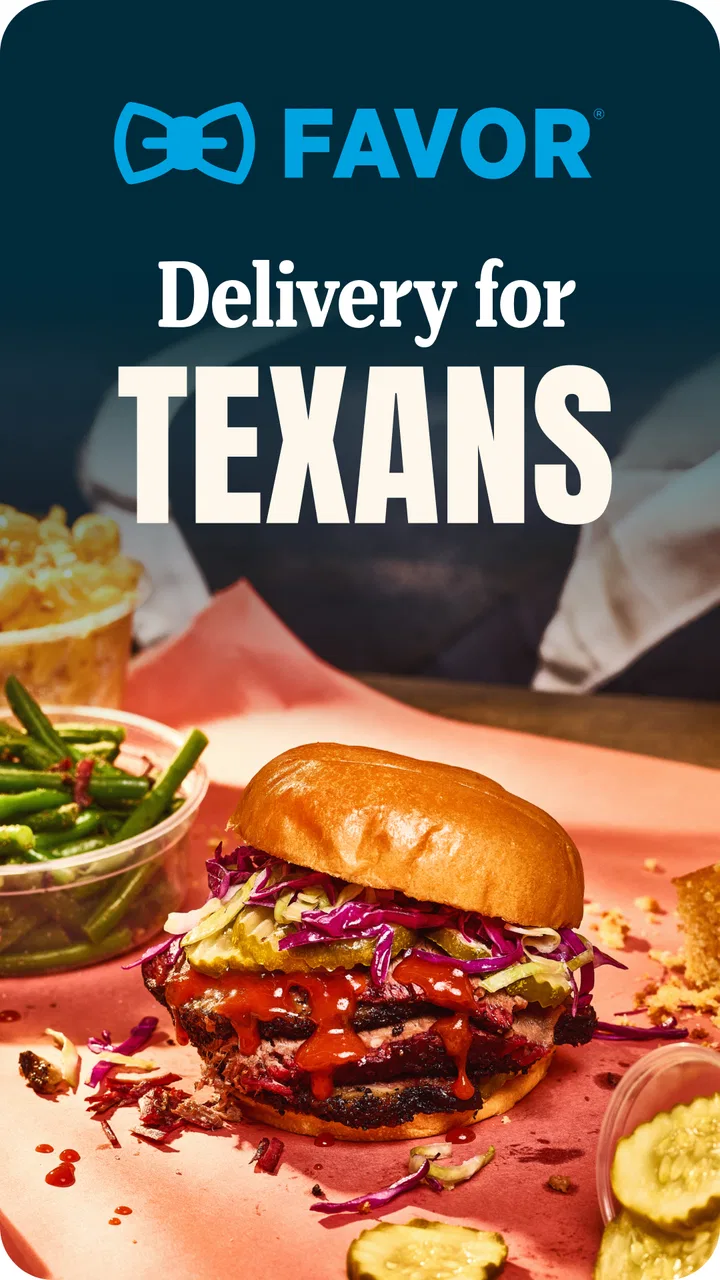
Favor: Texas Food Delivery
- 4.5
- Rating
- 1.00M
- Installs
- Free
- Price

 Analysis by App-foxy
I first look at Favor when I want food brought to me without turning the order into a research project. It is a free Food & Drink app from NeighborFavor, Inc., built around the Texas delivery experience rather than trying to be a general-purpose shopping tool. That focus is its biggest appeal: when the service covers what I need, the path from craving to doorstep feels more direct than arranging pickup myself.
My overall impression is positive, but not blindly enthusiastic. The app is best understood as a practical local delivery option, not a universal replacement for every restaurant’s own ordering system. It has earned a 4.5 average from around 64 thousand ratings, with more than 1 million installs, so it clearly has a substantial user base. Still, popularity does not remove the need to check whether the available choices, delivery timing, and final cost suit a particular order.
From “I need dinner” to a completed Favor order
I’ll focus on the point where an ordinary dinner plan becomes an actual order, because that is where the app’s convenience is easiest to judge. I also look at the small choices that can prevent avoidable back-and-forth, such as checking the basket and making the delivery location clear before confirming.
You May Also Like

 Blood Strike: 2.5 Anniversary
Blood Strike’s Loadouts Turn Every Drop Into a Tactical Gamble
A close look at Blood Strike’s custom loadouts: how fast access to signature weapons reshapes its battle royale rhythm, rewards preparation, and narrows the gap between fights.

 Pandora - Music & Podcasts
Pandora’s Music Is Easy to Start, but Harder to Recover
Pandora’s strength is its low-effort path from a seed to a station. Its weak spot is how much confidence it asks you to place in connection, setup, and quiet recovery.

 8 Ball Pool
 Is Built on Rivalries, Rematches, and Routine
A close look at the rivalries, rematches, shared routines, and unanswered safety questions that turn a quick pool match into a persistent mobile community.

 Samsung Music
’s Quiet Strength Is Playing What You Already Own
Its reach comes less from spectacle than from dependable access to a personal library. That simplicity is both the app’s strongest retention engine and its ceiling.

 AccuWeather: Weather Radar
AccuWeather Review: A Quick, Clear Forecast for Everyday Decisions
For everyday plans, the best forecast is the one you can understand quickly. AccuWeather makes rain timing, radar, and local conditions easy to act on, with a few trade-offs.

 Hill Climb Racing
Why Hill Climb Racing Still Turns Crashes Into One More Run
A tiny car, a bumpy hill and one more upgrade: Hill Climb Racing keeps resurfacing because its simple chaos makes every near-miss feel personal.
More From Our News Desk
View All News


Starting with the real situation
The most useful way to judge Favor is to imagine an ordinary evening. I am working late, the kitchen is empty, and I want something more specific than a quick snack. I open the app, set up the delivery details, and begin by seeing what is available for my location. That first step matters because Favor is location-dependent: the experience is shaped by the Texas area being served and by the businesses visible there.
This makes it different from browsing a restaurant’s menu in isolation. I am not only deciding what sounds good; I am also checking whether the restaurant can be reached through this service at the time I need it. For someone who already knows the local options, that can be convenient. For someone expecting every restaurant in the area to appear, it may feel narrower than a large national delivery marketplace.
I find the app most useful when I approach it with a clear plan. If I know I want a meal from a particular local place, the search process is easier than opening several restaurant apps one after another. If I am undecided, the selection can still help, but I need to spend more time comparing menus and delivery details. That is a normal trade-off for a service whose value depends heavily on local coverage.
Building the order without rushing
Once I find a suitable restaurant, I treat the menu as a checklist rather than tapping through it casually. I confirm the main dish, sides, drinks, and any choices that change the order. This is one of the small habits that makes a noticeable difference: delivery mistakes are harder to fix than mistakes caught while the order is still on the screen.
I also review the order summary carefully before sending it. A familiar restaurant can still have different menu wording or combinations in a delivery app, and an item that looks obvious may include an option I need to select. I would rather spend an extra minute checking the basket than discover at the door that a missing side or incorrect customization has changed the meal.
Favor is free to install and is rated for Everyone, which makes it approachable for a broad household. The current version is 6.9.0, and it runs on operating systems from version 9 onward. Those details are useful for older phones: if the device is below that requirement, the practical question is compatibility before anything else. On a supported phone, the main learning curve is not technical; it is understanding the local ordering flow and checking the details before confirmation.
The handoff between restaurant and runner
The distinctive part of the experience is the handoff. I am not simply placing an order with a restaurant and waiting for that restaurant’s own driver. The request moves from me to the service, then to the restaurant, and finally through the person handling the delivery. Every handoff is an opportunity for the order to move smoothly, but also an opportunity for timing or item details to become less predictable.
That is why I see Favor as more than a digital menu. The app coordinates a small chain of responsibilities. I provide the address and order choices; the restaurant prepares the food; the delivery side gets it from the business to me. When all three parts line up, the convenience is excellent. When one part is delayed, the app cannot make the kitchen cook faster or make an unavailable item appear.
For a busy household, this handoff can be especially useful. One person can place the order while someone else finishes work or looks after children. For a group order, however, I would confirm every item before submitting because correcting one person’s mistake after the request has moved forward is more complicated than editing the basket at the start.
What I do while the order is in motion
After confirming, I keep the app available rather than assuming the process is finished. I check the order status and stay alert for anything that requires attention. This is a better workflow than placing an order and immediately leaving the phone somewhere else, especially when the delivery depends on access instructions or a precise handoff at the destination.
My practical tip is to make the delivery location easy to understand before ordering. If the entrance is not obvious, I provide useful directions in the available order or delivery notes rather than relying on a last-second phone call. I also keep my phone nearby. That does not guarantee a perfect delivery, but it reduces the chance that a simple clarification becomes a long delay.
This is one area where Favor feels different from pickup. With pickup, I control the final leg and can inspect the bag at the counter. With delivery, I trade that control for convenience. I therefore use the app when saving the trip is worth more to me than having direct control over the collection process.
The result at the door
The successful outcome is straightforward: I receive the meal without driving, parking, waiting in a restaurant, or coordinating a separate pickup. That benefit is strongest on evenings when time and energy matter more than squeezing every possible step out of the process. It is also useful when I am at home with someone who cannot easily leave, or when weather and schedules make a short trip inconvenient.
I judge the result on more than whether the food arrives. I ask whether the order matches what I selected, whether the handoff was clear, and whether the convenience justified the final amount. Delivery can be the right choice even when pickup would cost less, but I do not treat that as automatic. For a simple nearby order, collecting it myself may still be faster and more economical.
Compared with ordering directly from a restaurant, Favor can put the search and delivery step in one place. The restaurant’s own app or website may be better when I want that business’s complete loyalty system, direct communication, or a menu designed specifically for its kitchen. Compared with calling, Favor is easier for reviewing written item choices and avoiding misunderstandings caused by a rushed conversation. Compared with a broad delivery marketplace, its Texas-centered identity may feel more relevant locally, while the national alternative may offer a wider selection in some areas.
Where the workflow breaks down
The main weakness is that convenience depends on several outside factors. A restaurant can be busy, a selected item can become unavailable, or the delivery route can take longer than I hoped. None of those problems makes the app useless, but they do mean I avoid using it when I need a guaranteed arrival time for an important event.
I am also cautious with orders that are unusually complicated. A large meal with many substitutions, separate preferences, or several people sharing one basket creates more chances for confusion. In that situation, ordering directly from the restaurant may offer clearer communication, while pickup lets me resolve questions before leaving the counter.
Another limitation is the local nature of the service. Favor makes sense for someone in its active Texas delivery area, but it is not a universal solution for travelers or people who regularly order across different regions. I would check the available local options before planning around it. If the restaurant I want is not represented, the app cannot replace a direct order or another delivery service.
I also would not choose it solely because installation costs nothing. The free app is only one part of the decision; the order itself still needs to make sense for my budget and situation. I compare the convenience with pickup, direct ordering, and the possibility of cooking something simple. That habit keeps the app useful instead of turning every meal into a delivery purchase.
Small habits that improve the experience
- Check the basket as if someone else will prepare it. Confirm quantities, choices, sides, and drinks before submitting, particularly for group meals.
- Prepare the handoff, not just the order. Make the entrance and delivery location easy to identify, and keep the phone available for a clarification.
- Use Favor for the right kind of urgency. It works well when I want to remove a trip from my evening, but I avoid relying on it for a strict deadline.
- Compare alternatives before confirming. Direct restaurant ordering can be preferable for loyalty benefits or complicated requests, while pickup can win when speed and control matter most.
These habits reveal the app’s actual strength. Favor is not valuable because it eliminates every uncertainty; it is valuable because it turns a local food run into a coordinated digital handoff. The more clearly I define the order and the destination, the more of the process works in my favor.
Who should use it, and who should skip it
I recommend Favor to Texas residents who regularly want restaurant food delivered and prefer a single app for discovering and arranging local orders. It is particularly suitable for busy evenings, home-based workdays, families managing different schedules, and anyone who values avoiding the drive more than handling the pickup personally.
I would be more selective if I were highly price-sensitive, ordering from a restaurant just a few minutes away, or needing detailed back-and-forth about special preparation. In those cases, pickup or direct contact may be the better route. I would also skip it for a time-critical meal unless I had enough flexibility for a delay or a change in availability.
The app’s age rating of Everyone makes it easy to recommend as a household utility, but the best user is still someone willing to review the order and participate in the handoff. It is not a set-and-forget tool. My experience is better when I treat the confirmation screen, delivery details, and final check as meaningful parts of the order rather than formalities.
My final take on the Texas delivery workflow
Favor is at its best when convenience means removing one tiring trip from a normal day. I like the clear purpose, the local Texas focus, and the way it brings restaurant selection and delivery coordination into one workflow. The strong average rating and broad install base suggest that many people find that arrangement worthwhile, and I can understand why.
At the same time, I would not promise that every order will be effortless. The restaurant, delivery route, and handoff all affect the result, and the app cannot remove the trade-offs of delivery. I check the basket, prepare the destination, and compare the situation with pickup or direct ordering before I commit.
For me, that makes Favor a useful everyday Food & Drink app rather than an app I would use automatically for every meal. If you are in its Texas service area and want a practical way to order local food without making the trip yourself, Favor is worth trying. If your priority is the lowest possible cost, maximum menu control, or a guaranteed schedule, another option may fit better. Used with those expectations, Favor delivers a sensible balance between local choice and saved time.
FAQs for Favor: Texas Food Delivery
01What is Favor: Texas Food Delivery?
Favor is a food delivery app specifically designed for users in Texas. It allows you to order a variety of foods from local restaurants and have them delivered straight to your doorstep. The app offers a seamless experience and is known for its speedy delivery and user-friendly interface.
02How does Favor ensure timely deliveries?
Favor employs a network of local runners who are familiar with the area, allowing for quick and efficient deliveries. The app also uses a smart system to assign orders, optimizing routes to ensure that your food arrives fresh and on time. This focus on local expertise helps maintain their reputation for speed.
03Is Favor available outside of Texas?
Currently, Favor is exclusive to Texas, focusing on providing the best possible service to this region. It has become a staple for Texans due to its local expertise and dedication to the state. If you’re outside Texas, you might need to look for other options that cater to your location.
04What payment methods does Favor accept?
Favor accepts a variety of payment methods to ensure convenience for its users. You can pay using major credit and debit cards directly through the app. It also supports digital wallets for added flexibility. The app ensures secure transactions, keeping your financial information safe.
05Are there any special features in the Favor app?
Favor offers several features to enhance user experience, including real-time order tracking, a favorites list for easy reordering, and personalized restaurant recommendations. Users can also benefit from exclusive deals and promotions available through the app, making dining more affordable.
Pros
- Wide range of local restaurants available.
- User-friendly interface for easy navigation.
- Real-time tracking of delivery orders.
- Option to schedule future deliveries.
- Secure payment options available.
Cons
- Limited to Texas locations only.
- Occasional delays during peak hours.
- Service fees can be high.
- App requires constant updates.
- No option for cash on delivery.

Favor: Texas Food Delivery
Gallery